
Chronic Pain in Your Jaw, Head, or Neck?
Your Teeth Might Not Be the Problem.
You might be experiencing TMD – Temporomandibular Muscle & Joint Disorder, and relief could be closer than you think.
Clinic Solely Focused on TMJ/TMD
Consult Our Doctor Today!
Misdiagnosis of TMD Can Lead To Prolonged Unnecessary Pain & Suffering.
Symptoms
Do You Face Any of The Following Symptoms
- Orofacial pain (pain felt in the mouth, jaws or face)
- Ear pain
- Neck aches
- Frequent headaches
- Muscle spasms in the jaw
- Difficulty chewing food
- Locking of the jaw
- Crunching or clicking sensations and sounds on either side of your jaw
You May Potentially Be Suffering From TMD
Have you seen a GP, an ENT specialist, Neurologist, or Dentist but is still suffering from chronic pain?
TMD may present symptoms similar to other chronic conditions, if you’re unsure, consult Pain Management Dentist Dr Eric Chionh today!
What is TMD/TMJ?
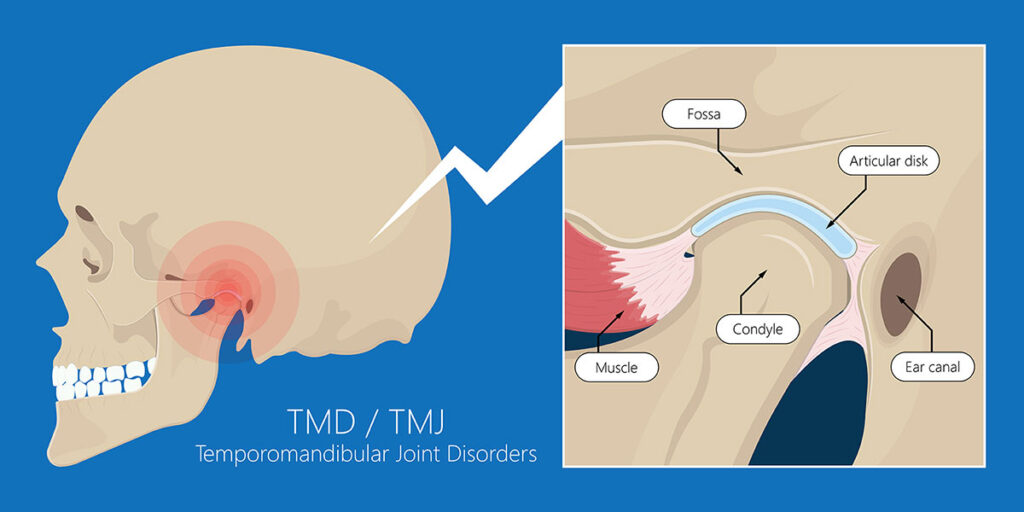
The temporomandibular joint (TMJ) acts like a sliding hinge, connecting your jawbone to your skull. You have one joint on each side of your jaw.
‘TMD’ stands for temporomandibular muscle & joint disorder, which is a group of conditions that cause pain and loss of normal function to the jaw, head and neck muscles, as well as the TMJ.
Treatment of TMD
Dr Chionh would typically begin by asking several questions about your medical history, medications you may be on, recent injuries, and other health conditions. Dr Chionh will then examine your jaw, face, neck, ears, mouth and throat.
There are five main pairs of muscles that control your jaw, Dr Chionh will manipulate your jaw in various directions and motions, in order to judge the extent of the problem. If a closer look is needed, an x-ray, MRI or CT scan may be taken as well.
With that, Dr Chionh will be able to diagnose your condition and the following treatment options may be recommended:
- Medication
- Low Level Laser Therapy (LLLT)
- Splint Therapy
- Physical Therapy
- Transcutaneous Electrical Nerve Stimulation (TENS)
- Ultrasound
- Other more complex procedures for more severe cases
Our TMJ Doctor Singapore
Dr Eric Chionh
Approved Postgraduate Qualification in Oral Medicine/TMJ.
Dr Chionh brings with him a wealth of experience and knowledge in the areas of TMD and dental surgery as well as oral medicine.
He has a keen interest in pain management and enjoys diagnosing and discussing pain issues in depth with clients. Highly analytical and driven, Dr Chionh is passionate about treating pain issues and takes great pride in ensuring patients get better and regain their normal lifestyles.
Accreditations / Memberships of Relevant Professional Organisations
- Bachelor of Dental Surgery, National University of Singapore
- Master of Science in Oral Medicine, University College London
- Graduate Certificate in Orofacial Pain, University of Southern California
- Fellow, International Congress of Oral Implantologists
- Accreditation in Dental Sleep Medicine, European Academy of Dental Sleep Medicine
- Diplomate, American Board of Orofacial Pain
- Fellow, American Academy of Orofacial Pain
FAQs
Frequently Asked Questions
Whilst the root cause of TMD is yet unknown, there are a few triggers that can be stress related. Some of which are:
- Habitual grinding or clenching of teeth
- Arthritis (Osteoarthritis, Rheumatoid Arthritis, etc)
- Other inflammatory and musculoskeletal disorders
- Jaw injuries or trauma
- Poorly positioned teeth
- Poor posture (especially in the neck and upper back areas)
- People who have a genetic disposition to pain and/or stress sensitivities
- Orthodontic braces
- Excessive gum chewing
Whilst TMD can affect anyone regardless of age or gender, it is more common in adults between 20 – 40 years of age. It also affects women more than men. It is also estimated that more than 30 percent of adults will suffer from it at some point in their lives.
The ‘Jaw Joint’ or Temporomandibular Joint (TMJ) is a complex gliding hinge (ginglymoarthrodial). It is one of the most used joints within our bodies. It is also the only joint in the body connected to its opposite counterpart. It would be impossible to talk, chew or swallow without it.
You may be surprised, but TMD can also cause ear pain. Our ears are delicate, complex organs, and are in close proximity to the TMJ. It can also cause tinnitus (ringing in the ears), hearing loss, swelling, inflammation and other ear related problems.
Our ears play a crucial role in our body’s equilibrium. Hence, you may experience dizziness or have trouble with your balance, as a result of these issues. In fact, up to 80% of TMD patients report having pain in their ears. The body operates as a whole, and problems in one area can often affect other parts, too.
Our clinic is equipped with facilities for a thorough and comprehensive ear check-up.
One of the differences between the general dentist and the orofacial pain specialist is in the area of education and training.
In addition to general dental training which the general dentist has gone through, the orofacial pain (OFP) specialist has undergone further extensive formal advanced clinical & didactical training (known as ‘residencies’ in the U.S.). Also, numerous rigorous examinations need to be passed before completion of training.
Another difference is that the orofacial pain specialist will, because of his advanced training, have an enhanced knowledge of pharmacology due to the use of medications not typically prescribed in general dentistry.
The orofacial pain dentist must therefore be competent in the diagnosis treatment, rehabilitation and prevention of orofacial pain disorders. These include being knowledgeable in areas such as neuropathic pain, masticatory, cervical pain, musculoskeletal pain, neurovascular pain, psychological concerns and sleep disorders to mention a few.
The rapidly evolving field of Orofacial pain is a vital dental specialty. Recognizing and knowing when to refer a patient to an Orofacial pain specialist will be a win-win situation for the dental profession as well as the overall patient population.
Disclaimer: Orofacial pain is an officially recognized specialty in the United States. Any reference to ‘specialist’ is made in the context of the United States.
Contact
Get in Touch
If you have any inquiries or would like to request for further information regarding our services. Please contact us by filling up the form. We will attend to your request within 1 business day.
Send Us a Message
Copyright © Oral Care Specialists Inc Pte Ltd